
Budget Home Decor: 19 Ways to Make Your Home Look Expensive for Less
Budget home decor doesn’t have to look budget. Expensive-looking rooms are rarely the result of expensive furniture — walk through a home that feels polished and you’ll usually find the same handful of decisions repeated: the right proportions, restrained color, layered light, and a few textures that read as natural rather than plastic. None of those cost much money. What they cost is attention.
This budget home decor guide walks through 19 changes you can make on a real budget. Most land under $50. A few are free. All of them are renter-friendly unless noted, because roughly a third of American households rent, and losing a security deposit over a curtain rod defeats the point.
Budget Home Decor Basics: Three Rules That Do the Heavy Lifting
Before buying anything, understand why some rooms look costly and others don’t. Almost every trick below traces back to one of these three ideas.
1. Scale beats quantity
The single most common budget-decor mistake is buying many small things. Five tiny frames scattered across a wall look cluttered; one large piece looks intentional. The same logic applies to rugs, mirrors, plants, and light fixtures. When in doubt, buy one bigger item instead of three smaller ones — it usually costs the same and looks dramatically better.
2. Cohesion beats variety
Rooms read as “designed” when materials repeat. Pick two metals maximum (brass and black is a reliable pair), two or three woods in a similar undertone, and a color palette of one dominant neutral plus one accent. Repetition is what makes a thrifted mix look curated instead of random.
3. Light is the cheapest luxury
Overhead lighting alone flattens a room. Three light sources at three different heights — floor, table, and something at eye level — is the fastest visual upgrade available for under $60.
Walls and Windows
4. Hang your curtains high and wide
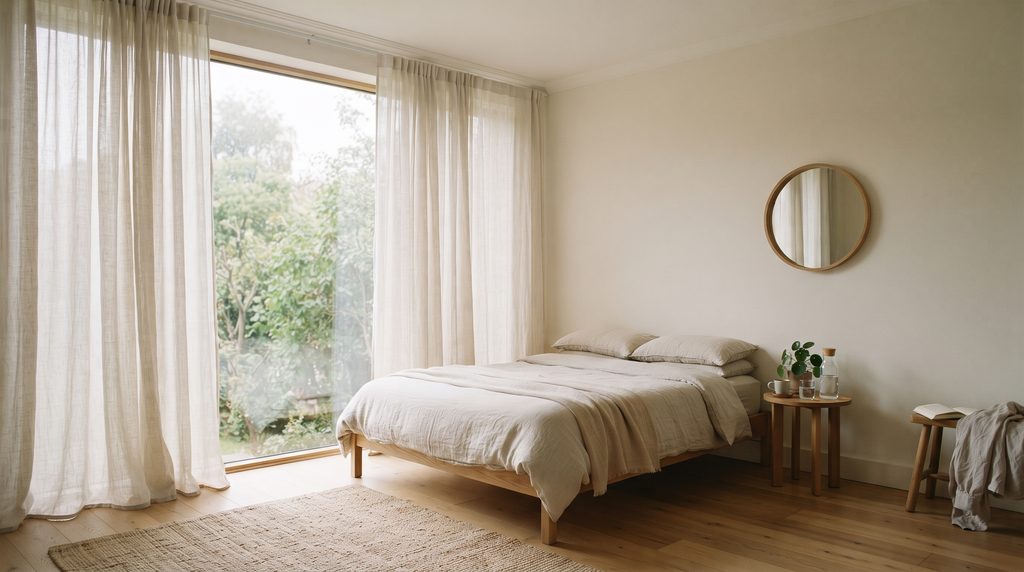
This one is free and it changes the room more than anything else on the list. Mount the rod 4 to 6 inches below the ceiling, not just above the window frame, and extend it 8 to 12 inches past the window on each side. The window reads as larger, the ceiling reads as taller, and more actual daylight gets in because the panels stack on wall instead of glass.
Buy curtains long enough to just brush the floor. Panels that stop short at the sill are the most reliable giveaway of a rushed decorating job. If your window is 84 inches from rod to floor, buy 84-inch panels, not 63-inch.
5. Iron or steam the panels before hanging
New curtains arrive folded and creased. Ten minutes with a steamer is the difference between “linen drapes” and “packaging.”
6. Fix your art height
Gallery standard is 57 to 60 inches from the floor to the center of the piece. Over a sofa, hang art 6 to 8 inches above the back cushions so the two read as one composition. Most people hang art too high — it’s the second most common giveaway after short curtains.
7. Choose one large mirror over a mirror collection
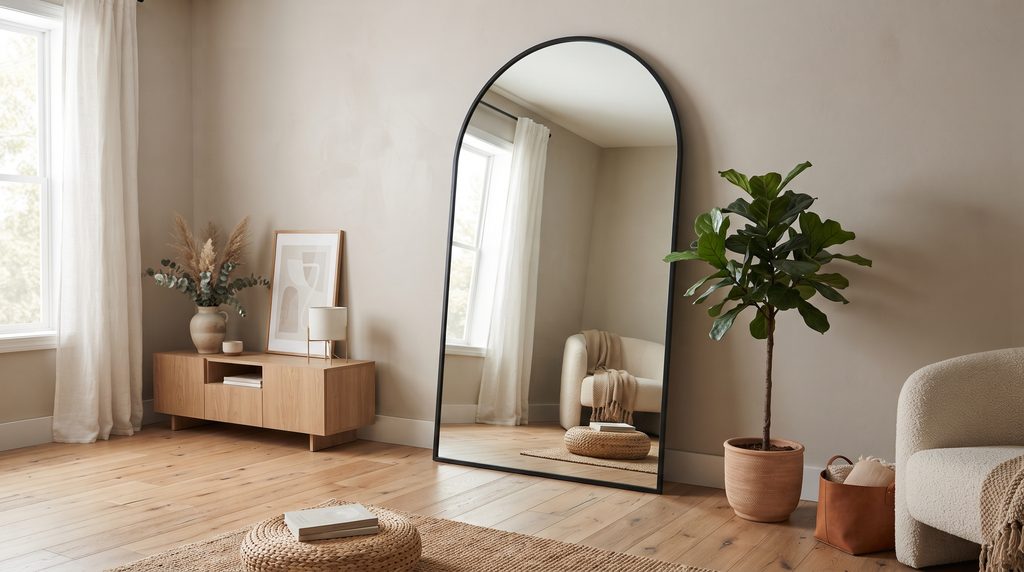
A single oversized mirror leaned against a wall or hung opposite a window bounces daylight deep into the room and doubles the apparent square footage. Thrift stores, estate sales, and Facebook Marketplace are full of large mirrors in solid frames for $20 to $60, largely because they’re awkward to transport. If the frame is ugly, spray paint it matte black.
8. Use peel-and-stick wallpaper on one small surface
A full room of removable wallpaper is expensive. A single accent — the back of a bookshelf, a powder room wall, the risers of a staircase — takes one or two rolls and creates the impression that someone made a deliberate choice about the space.
Furniture Without the Furniture Budget
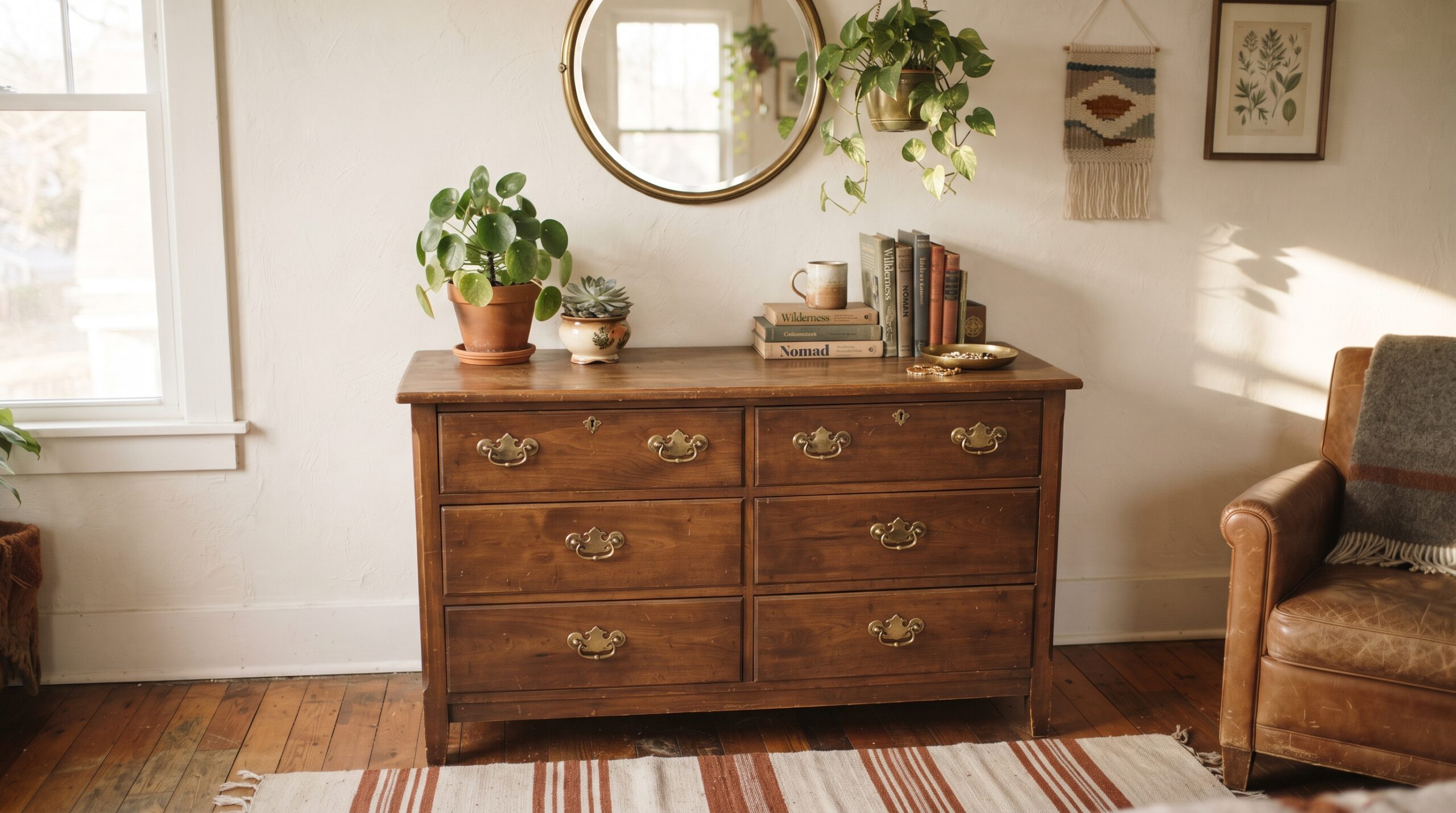
9. Buy secondhand for anything solid wood
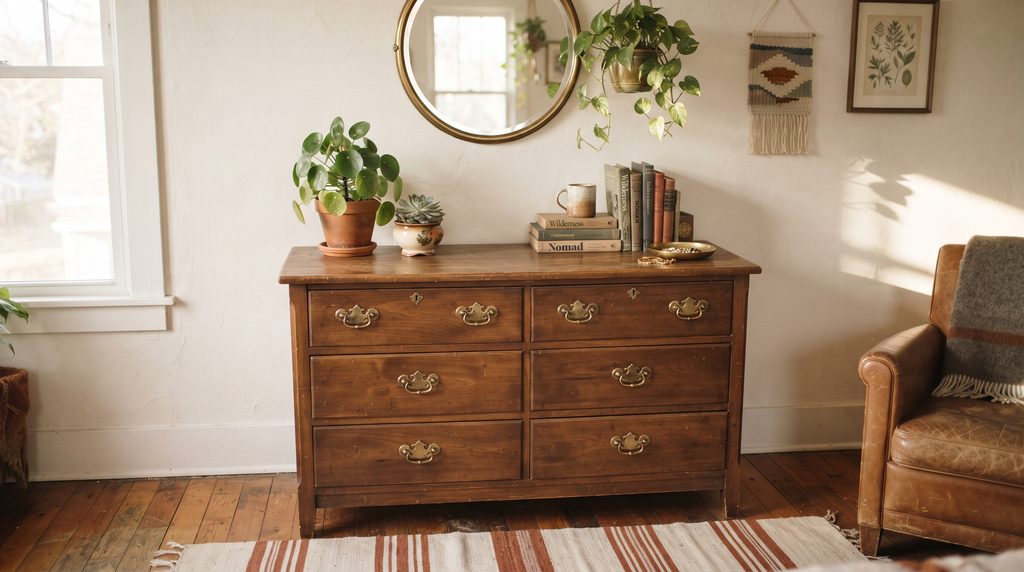
This is where real money is saved in any budget home decor plan. Solid wood dressers, dining tables, and bookcases from the 1960s through the 1980s are built better than most new furniture at three times the price, and they sell for a fraction of it. Search Facebook Marketplace, OfferUp, Craigslist, Habitat for Humanity ReStores, and estate sales.
What to check before buying: pull out a drawer and look for dovetail joints, press down on the top to test for wobble, open and close every door, and smell the interior — a musty odor in a closed piece is hard to remove. Avoid anything with visible water swelling on particleboard.
10. Change the hardware
Swapping builder-grade knobs for solid brass or matte black pulls costs $2 to $6 per piece and instantly modernizes a dated dresser or a rental kitchen. Measure the distance between existing screw holes first — 3 inches and 96 millimeters are the most common — and keep the original hardware in a labeled bag if you’re renting.
11. Paint one piece, not everything
A single painted piece in a saturated color anchors a room. Use a bonding primer, two thin coats, and a water-based topcoat. Skip the trend of painting every wood surface white; the contrast between painted and natural wood is part of what makes rooms feel layered.
12. Raise your sofa on wooden legs
If you own a low, heavy sofa, replacing the stubby factory feet with 4-to-6-inch tapered wood legs costs around $25 for a set and makes the whole piece look lighter and more expensive. Most attach with a standard 5/16-inch bolt or a screw plate.
Textiles, Texture, and the Cheap Stuff That Reads as Expensive
13. Get the rug size right
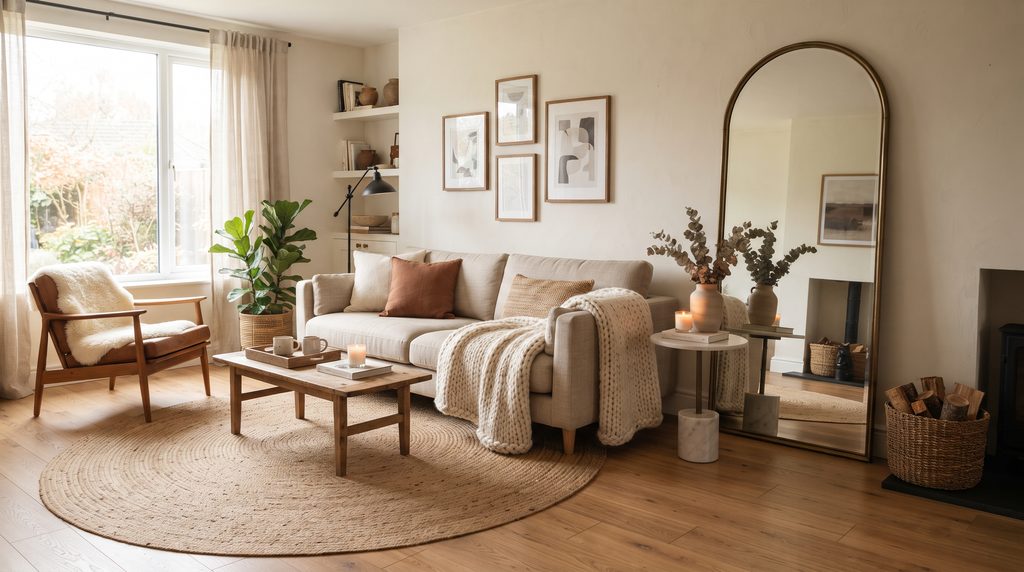
An undersized rug shrinks a room and is the most expensive mistake on this list to fix, so measure first. In a living room, the front legs of every seating piece should sit on the rug. Under a dining table, the rug should extend at least 24 inches past the table edge so chairs stay on it when pulled out. If a large rug is out of budget, layer a smaller patterned one over an inexpensive natural jute or sisal rug — the jute provides the scale, the top rug provides the personality.
14. Mix at least three textures per room
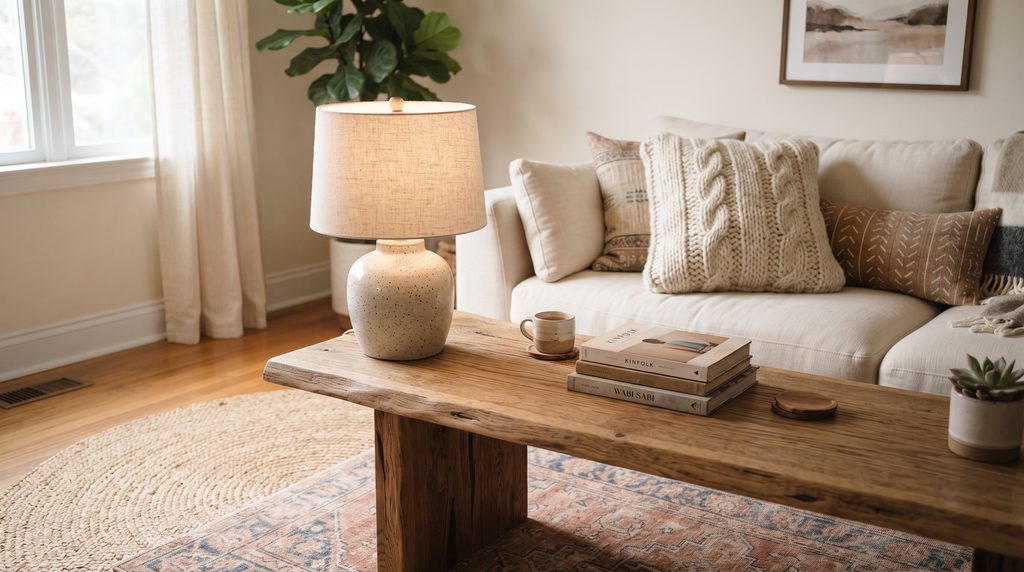
Flat rooms photograph badly and feel unfinished in person. Combine something woven, something soft, something with sheen, and something living: a jute rug, a chunky knit throw, a ceramic lamp, and a plant. Texture is what stops a neutral palette from reading as a hotel, and it’s one of the cheapest budget home decor upgrades available.
15. Buy pillow covers, not pillows
Covers cost a few dollars, ship flat, and let you change a room seasonally without storing bulky inserts. Size up: a 20-inch or 22-inch insert in a 20-inch cover gives the plump, karate-chopped look designers use, while a thin 18-inch pillow looks deflated.
16. Replace your lampshades
Cheap lamps usually look cheap because of the shade, not the base. A crisp linen or paper drum shade for $15 to $25 will make a $12 thrifted base look considered.
Plants, Light, and Finishing Details
17. Use fewer, larger plants
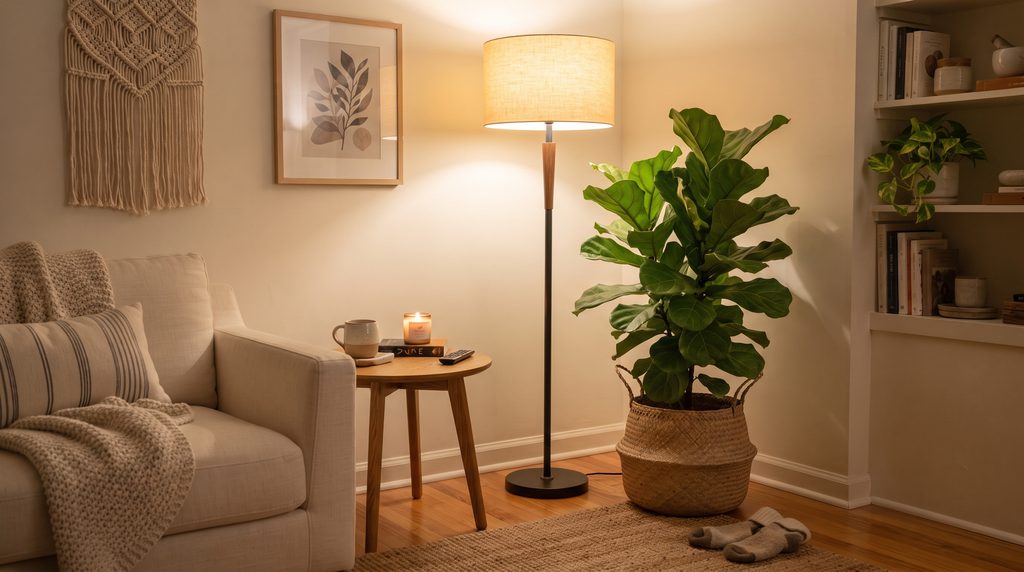
This is classic budget home decor logic: one floor plant in a woven basket does more than six small pots on a windowsill. If light is poor or you travel, a single high-quality faux tree is worth more than several bad ones — look for a plant with varied leaf shading and a real wood trunk, and place it slightly away from eye level. Snake plants, ZZ plants, and pothos are the forgiving real options for low light.
18. Standardize your light bulbs
Mismatched color temperature is subtle but it makes a home feel institutional. Use 2700K to 3000K warm white bulbs everywhere in living areas, and put the main sources on inexpensive plug-in dimmers. A full set of matching bulbs costs under $25 and is arguably the highest-return purchase in this entire guide.
19. Hide the cords and edit the surfaces
Adhesive cord channels, cable sleeves, and a $10 basket for remotes clear the visual noise that reads as “cluttered” no matter how nice the furniture is. Then remove a third of what’s sitting on every flat surface. Empty space is a design element, and it’s free.
When to Shop for the Best Prices
Timing is a core budget home decor strategy. Home goods follow a predictable US retail calendar. January and July are the traditional clearance months, when retailers move out old inventory. Memorial Day, Labor Day, and Black Friday bring the deepest furniture and mattress discounts of the year. End-of-season markdowns in late August and late February are the best time for outdoor furniture and textiles respectively. If a purchase can wait six weeks, it’s usually worth waiting.
Frequently Asked Questions
How much does it cost to decorate a room on a budget? A meaningful budget home decor refresh of a single room — lighting, textiles, art placement, and one secondhand furniture piece — typically runs $200 to $500. Focusing only on the free fixes (curtain height, art height, surface editing, furniture arrangement) costs nothing and still changes how the room feels.
What makes a home look expensive? Correct scale, consistent materials, layered lighting, and restraint. Rooms look costly when a few elements are the right size and everything unnecessary has been removed — not when many expensive objects are present.
What should I buy first when decorating on a budget? Lighting and window treatments, in that order. They affect the entire room and cost far less than furniture.
How can renters decorate without losing the deposit? Stick to removable wallpaper, adhesive hooks rated above the weight of your art, tension rods, freestanding lamps, and swapped hardware you keep and reinstall before moving out. Photograph every wall before you start.
Further Reading
For more inspiration, browse decorating ideas on Apartment Therapy or budget styling tips from The Spruce. If you’re new to secondhand shopping, Better Homes & Gardens also has a solid room-by-room decorating library.
Leave a Reply